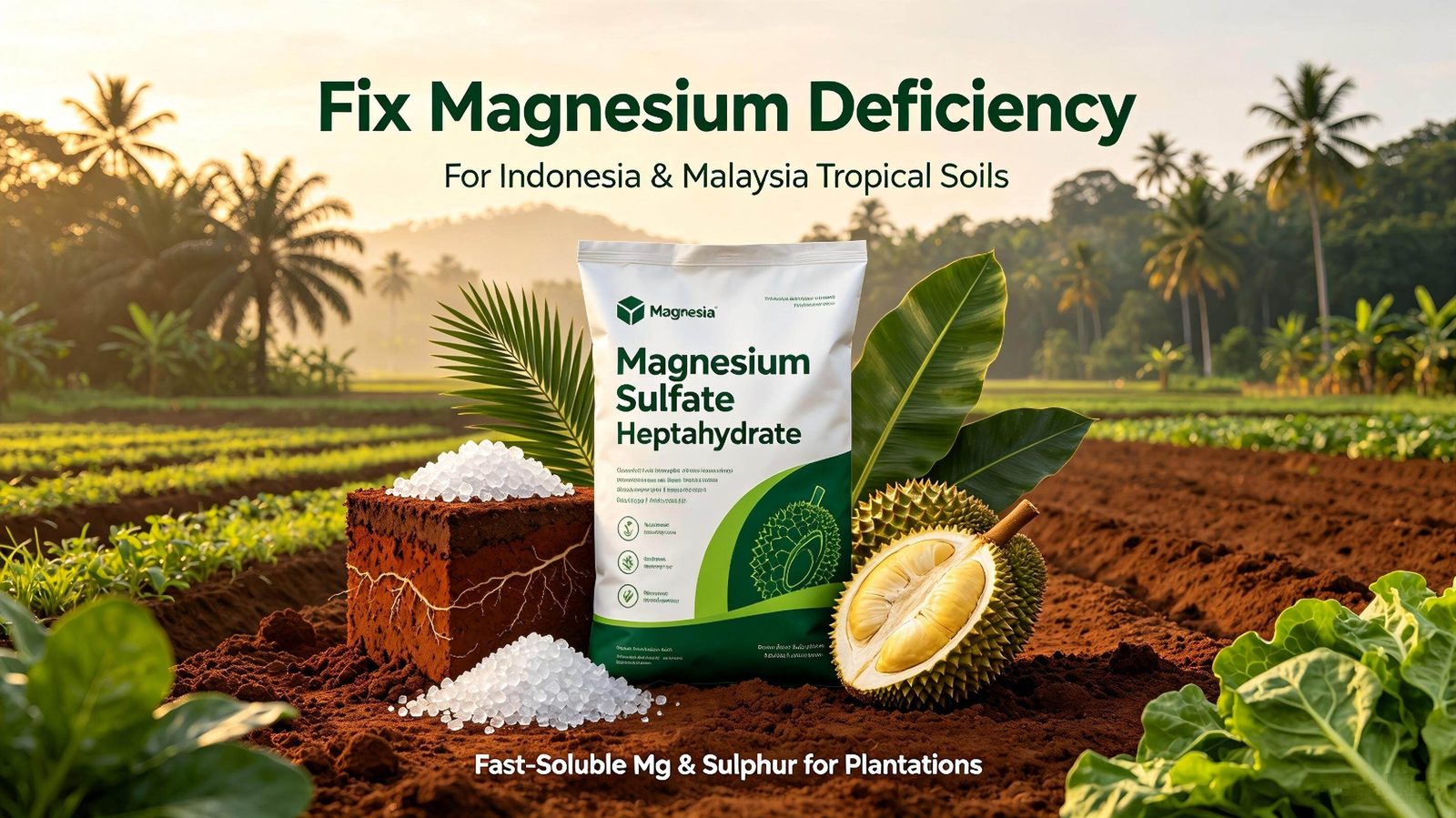
Tropical heavy‑rain soils across Indonesia and Malaysia frequently suffer magnesium leaching and magnesium deficiency, hurting yields of oil palm, rubber, tropical fruits and vegetables. This article introduces magnesium sulfate heptahydrate (Epsom salt), explaining why it matches local acidic tropical soil conditions, its core benefits and practical value for Southeast Asian plantation and farm operators.
Indonesia and Malaysia feature typical tropical acidic soils, with heavy year‑round rainfall. Massive rainfalls easily wash away exchangeable magnesium from laterite, sandy and peat soils, creating widespread magnesium deficiency across plantations and farmlands.
Local core crops including oil palm, rubber, durian and vegetables often show leaf yellowing, poor photosynthesis and limited output because of insufficient magnesium supply, a common hidden yield‑limiting issue for Southeast Asian growers.
Magnesium sulfate heptahydrate (MgSO₄·7H₂O) is a highly water‑soluble magnesium‑sulfur fertilizer, well‑suited for the soil characteristics of Indonesia and Malaysia. It quickly releases absorbable magnesium and sulfur elements, without bringing obvious pH disturbance to acidic local soils.
It works efficiently via soil spreading, fertigation or foliar spray. It helps crops rebuild chlorophyll, relieve magnesium‑deficiency chlorosis, strengthen plant metabolism and stabilize crop output and fruit quality for oil palm estates, rubber plantations, tropical fruit orchards and vegetable farms across both markets.
Compared with slow‑acting magnesium sources, heptahydrate magnesium sulfate delivers fast nutrient uptake, which offsets magnesium loss caused by frequent tropical rains. Consistent application helps you maintain balanced soil nutrition for long‑term plantation profitability in Indonesia and Malaysia.
Contact us for bulk supply, technical data sheet and COA documents for your agricultural purchasing.
Written by the technical team at TDHX Minerals, Haicheng, Liaoning, China.